Friday, June 24, 2011

Civil War Balloons in Sculpture

It seems like there's a lot of news on my Twitter feed about the Union army corps that used hot air balloons for reconnaissance (you can find one example tweeted by @CivilWarWeeks here; or learn more via the Civil War Daily Gazette or Wikipedia). This has a lot to do with the fact that in our march of 150th anniversaries of individual events, we are currently hovering around the opening battles of the war, when the use of balloons was having its heyday.

I first learned about balloons in the Civil War when I saw this odd relief panel for the first time:


This is one of three relief panels gracing the base of the Fitz John Porter Monument in Portsmouth, NH, sculpted by James Edward Kelly and installed in 1904. Kelly is a sculptor very close to my heart - years ago, I wrote my undergraduate thesis on his life and work after discovering a vast cache of his unpublished papers in the Smithsonian's Archives of American Art. Here's a full view of the Porter Monument:


(Note: position of horse's front right hoof is not a prognosticating device!)

The story of how Porter was maligned for his role in the Union loss at the Second Battle of Bull Run, court-martialed, convicted, but eventually cleared of all wrongdoing is a bit long to tell here, but the inclusion of the balloon in a monument to Porter is simpler: on April 11, 1862, Porter went up in a balloon on a reconnaissance mission only to discover that his soldiers on the ground had lost control of the guide ropes! Porter remained cool as a cucumber, though, and refusing to give up an opportunity, continued to record the enemy's position until the balloon was back under control and he could be safely brought down.

So on April 11 of next year, do we get to celebrate the sesquicentennial of Porter's runaway balloon ride?

Wednesday, June 22, 2011

The thing about horses and their feet

When I tell people I'm an art historian at a party, sometimes I get blank stares, followed by, "Well, you know, my cousin's best friend's babysitter is a graphic designer, and she knows all about that art stuff." And then the conversation dies. But other times, the conversation will go on to touch upon the old question, "So, what's with the horses' feet in Civil War monuments anyway? Do they predict whether the general died or what?"

I am here today to explain and dispel that old chestnut, as a public service.


The urban legend goes like this: If you see a statue of a Civil War general on a horse, and all four feet are on the ground, that means he lived through the war. If one of the feet is off the ground, that means he was wounded. If two of the feet are off the ground, then he was killed. If three or more feet are off the ground, then, well, you are dealing with one heck of a flying horse. And there are lots of variations on that.

So is there any truth to this? Overall, no. But a little bit yes.

First of all, dispel from your mind that this has anything to do with any place other than Gettysburg. Your local Civil War monument dedicated to your town hero may be an equestrian statue, and it may have four, three, two, or zero feet on the ground, but it doesn't have anything to do with anything related to the war hero's fate. The only thing you're learning by looking at your local monument is whether the artist that sculpted it knew anything about horse anatomy or not.

Now, at Gettysburg, up until 1998, this weird tidbit was, completely by accident, with no forethought or planning, with no consultation with any of the artists.... true. The "number of feet" did accidentally correlate with whether the general was killed wounded, or left unscathed at the end of the three days of fighting. But this pattern was pieced together by code-loving nuts in the twentieth century, never an artistic tradition.


How a sculptor chooses to render the horse component of an equestrian statue has much more to do with artistic license and skill than with anything else. Bronze is incredibly heavy, and thus the most stable way to render a statue of a horse is to place all four feet on the ground. Many great artists have struggled with the concept of a rearing horse, Leonardo being one famous example. The statue above, the monument to General John Reynolds (killed) at Gettysburg by H.K. Bush-Brown, depicts a horse with two feet raised, but the statue is carefully counterbalanced to distribute the monument's weight evenly. The resulting sculpture is a paean to the skill of the artist, not some attempt to adhere to a useless factoid.

I know I said that this weird business was only inadvertently true until 1998 - what changed?


This is the equestrian statue for Confederate general James Longstreet, sculpted by Gary Casteel. Longstreet, often maligned, was one of Robert E. Lee's most trusted corps commanders, but for years after the war he was blamed for the failure of Pickett's Charge due to the fact that he challenged Lee's plan of attacking an entrenched enemy over a mile of open ground (who in the world would think something like that would fail?). Longstreet's star has risen in recent years, however, at least in part due to his sympathetic portrayal in Michael Shaara's historical novel The Killer Angels and the 1995 film Gettysburg. I kind of love the way this monument subverts the idea of a traditional equestrian statue entirely by placing the statue on the ground directly in the viewer's space, and by the horse's dynamically frightened stance. But as you can see, the horse has a hoof off the ground, and Longstreet made it through Gettysburg with nary a scratch.

So, in sum, this old chestnut is never true in most places, was inadvertently and accidentally true for a time at Gettysburg, and now is true no longer. And if I ever meet Sarah Vowell, who I love, I will gush about how I love her writing but scold her for mentioning this urban legend in one of her books.

If you want to see another take on this legend, check out this article on Snopes.

Sunday, June 19, 2011

A brief material culture interlude

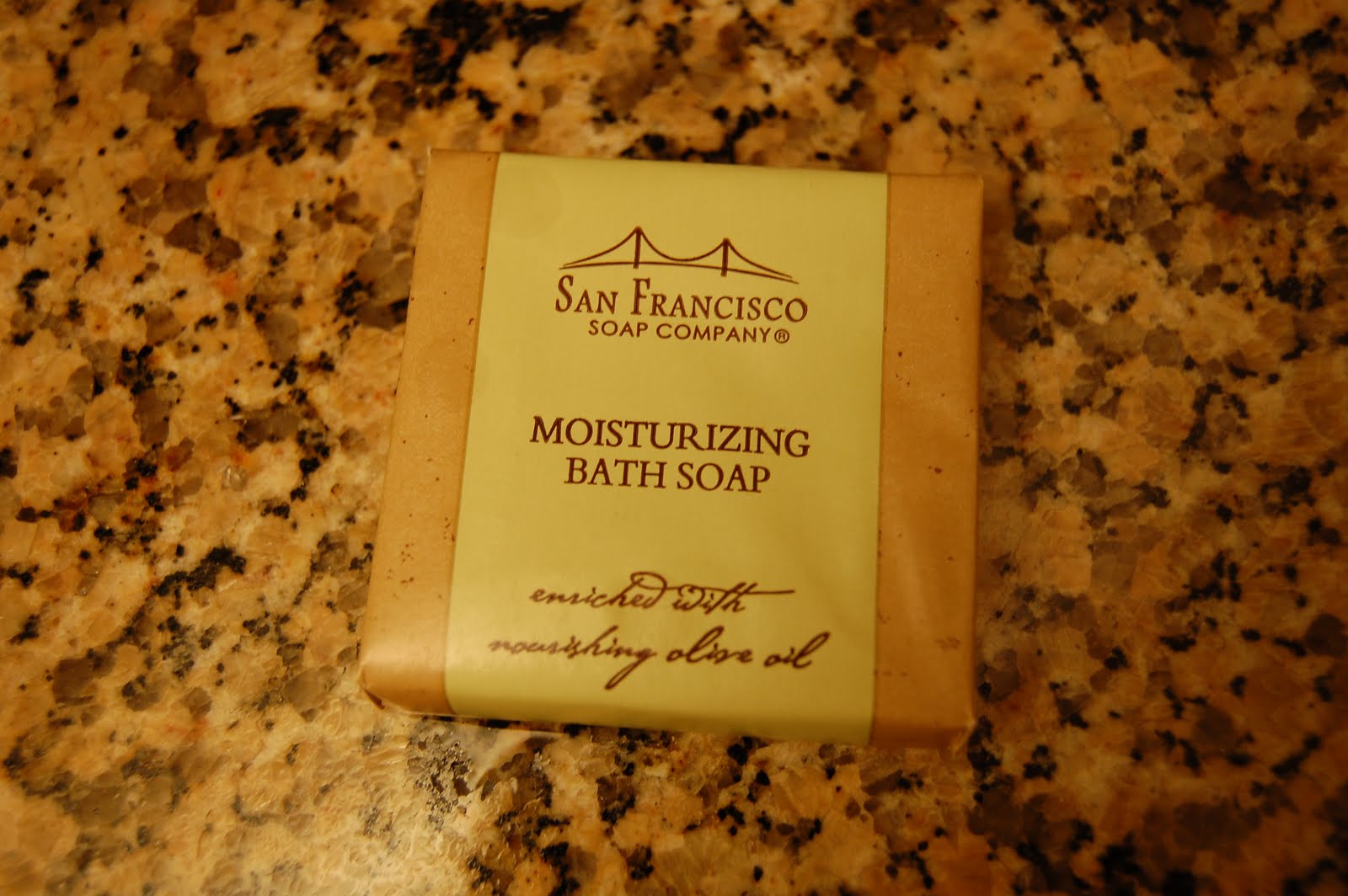
Charlie and I are stopped in a Super 8 Motel in Pennsylvania on our way back to Wisconsin after my interlude in Delaware for the past two weeks, and while I don't have much time to post (I need to get to sleep so I can drive tomorrow), I thought I'd share this quickly.

This is the soap from our hotel in Clearfield, PA, and I think it could be the beginning of a great lecture on the material culture of American auto travel. The exit where we've stopped is one of the typical sort so ubiquitous to anyone who spends a good deal of time on the road - anonymous, rather forgettable, filled with the corporate markers that one would expect on the side of an American highway (Holiday Inn, Super 8, Arby's, Lowe's, Burger King - and Sheetz, which makes subs much beloved by Charlie). And yet. The San Francisco Soap Company, and the Golden Gate Bridge. "Sure, you may be stopped for the night as you trek along Route 80," this soap may say, "but don't forget - if you keep driving, you'll end up in California! Anything is possible!" I love the "nourished with enriching olive oil" line also - I just washed my hands with this soap, and it's definitely the generic crappy hotel variety that makes your skin feel weird - but something about that line makes me picture sitting in the shade in a vineyard in Napa with a Cab Sav in one hand and something delicious in the other.

Or maybe I'm just tired. Folks, this is what it's like to travel with an art historian.

Tomorrow, once I get back to Wisconsin, I'm going to start working out for real what this blog will be and how I'm going to maintain it. I'm sure I will have more news soon!

Friday, June 17, 2011

This is why my dissertation is relevant


Because we are still going to war, and still using a lot of the same rhetoric that motivated people during the Civil War. I first saw this promo in a movie theater a few years ago, and I couldn't believe that I was hearing "Citizen Soldier" sung over and over again with images of Iraq, the Revolution, and D-Day. I'm at the point now where I'm going to start thinking about what public engagement projects I'd like to do post-PEMCI, and I'm thinking that this might be a good conversation starter for a general audience talk.

Thursday, June 16, 2011

Egyptian Revival in New Castle, Delaware

Today, PEMCI took us to historic New Castle, a gem in northeastern Delaware on the Delaware River packed with historic houses. The day consisted of visits to historic house museums and conversations about how to present these spaces to the public, all very engaging stuff, but I also had a chance to sneak off at the end of the day and add to my collection of photographs of pet interests:


This Egyptian Revival-style mausoleum, located in the churchyard of the Immanuel Episcopal Church, definitely caught my eye. I've been interested in the Egyptian Revival ever since my first year at Delaware, ever since I took a course (Egyptomania!) that encouraged me to explore Egyptian-style design in the American funerary sphere. My research there was centered around the American Sphinx, a highly idiosyncratic Civil War monument in Mt. Auburn cemetery in Boston, and maybe I'll share more of that research at some point when I'm having a slow blog day. Here's the Sphinx with a handsome human scale model:


Anyway, ultimately I hope to use some of my background reading on the Egyptian Revival to write something really compelling about how obelisks were used in cemeteries as early Civil War soldier monuments, and how this connects to Americans' obsession with Egypt. Should be fun times.

Wednesday, June 15, 2011

Odds and Ends

So, I'm realizing that being mind-bendingly busy is not always conducive to getting lots of blogging done.

I've been participating in a wonderful summer institute known by the difficult-to-pronounce moniker PEMCI, which stands for the Public Engagement Material Culture Institute, run by the Center for Material Culture at the University of Delaware, which I attend. Despite being about public engagement, PEMCI surprisingly does not have an up-to-date web presence, but here is an article about a past PEMCI student that explains the program. The schedule for the past few weeks has been wonderful, but exhausting enough that I've been going to bed at about 9:30 every night with no time for blogging. It doesn't help that the Soviet-inspired apartment I'm renting has no internet access.

Anyway, this all means that I'm thinking that I should save the real launch of this blog as a daily entity until next week, and for now, anything I post is a victory. Don't worry! I've been using transit time to jot down lots of ideas for future posts and features. I just have little energy for shaping them at this point.

I can't put up a post with no pictures, though, so I figured I'd share the (rather silly) image on the right. One of our tasks for PEMCI was to design a lesson plan for a K-12 audience, and mine was a combination of a field trip to a local monument and an art project, designing one's own monument. This is my monument to art historians - notice the precise uniform of chic black skirt and scarf. I didn't take pictures of the rest of the base, but I added some important tools of the trade: wine and cheese, a laptop, and tea.

Today, we took a trip to the Delaware Art Museum to learn about how museums do public outreach. Most of what we learned is shop talk that is outside the realm of this blog, but I really enjoyed wandering around the sculpture garden at lunchtime, especially my encounter with the Crying Giant by Tom Otterness, sculpted in 2002 (pictured at left). I first encountered Otterness' whimsical figures in the 14th Street subway station in New York City two summers ago, and I've kept his name stored in my head ever since then. The scale of this piece is pretty monumental - I think I would have about reached his knees (note to self - it's always good to take a scale picture with a human figure when photographing sculpture!). Overall, I was impressed with the Delaware Art Museum's collection in general and with the selections in the sculpture garden: though on a relatively modest scale, the sculptures present offered a lot of fun opportunities to puzzle through issues of movement in sculpture, bodily relationships, and sound. I highly recommend it if you are in Wilmington.

As a parting note, here I am two years ago with one of the Otterness sculptures in the 14th Street subway - you can see that they're on a much different scale!


Public art makes me happy.

Friday, June 10, 2011

Sculptocarbonite

Allegory of emancipation...


...or Han Solo after Boba Fett got to him?

This weird relief panel is part of the Soldiers and Sailors Monument in Providence, RI, designed by Randolph Rogers, who is swiftly become my favorite American expatriate sculptor (a lot of American sculptors in the mid-nineteenth century moved to Italy and spent the rest of their lives there, as I'm sure I will discuss a whole lot someday).

The whole monument looks like this:


The Emancipation panel above is one of the four panels that you see in the lower register of the monument, right above the stairs. There's a different allegory on each side.

I'm sure there will be a more informative post about Randolph Rogers coming one of these days, because I'm getting to like him more and more, but for now, this is a teaser. It's been a long day learning how to talk about material culture to people on TV, and I'm going to a dinner party in a little bit. Tomorrow: I'm hoping to have something fun to post after my trip to New York City!